
Minimally Invasive Hammertoe Surgery In Littleton, Colorado
Hammertoes can cause painful shoe irritation, corns, calluses, toe crowding, and worsening forefoot deformity. At The Bunion Cure, Dr. Jordan Sullivan focuses on minimally invasive forefoot correction, including hammertoes that can often be treated at the same time as bunions.
Smaller incisions
Often combined with bunion correction
No screws, plates, pins, or implants

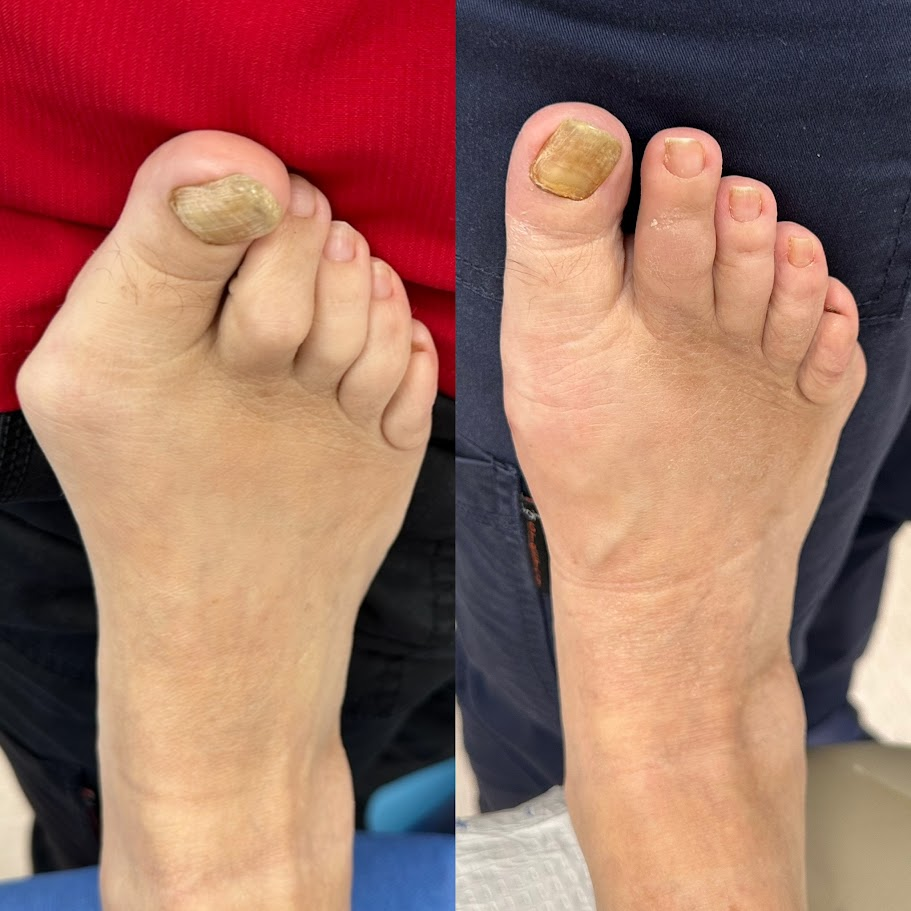
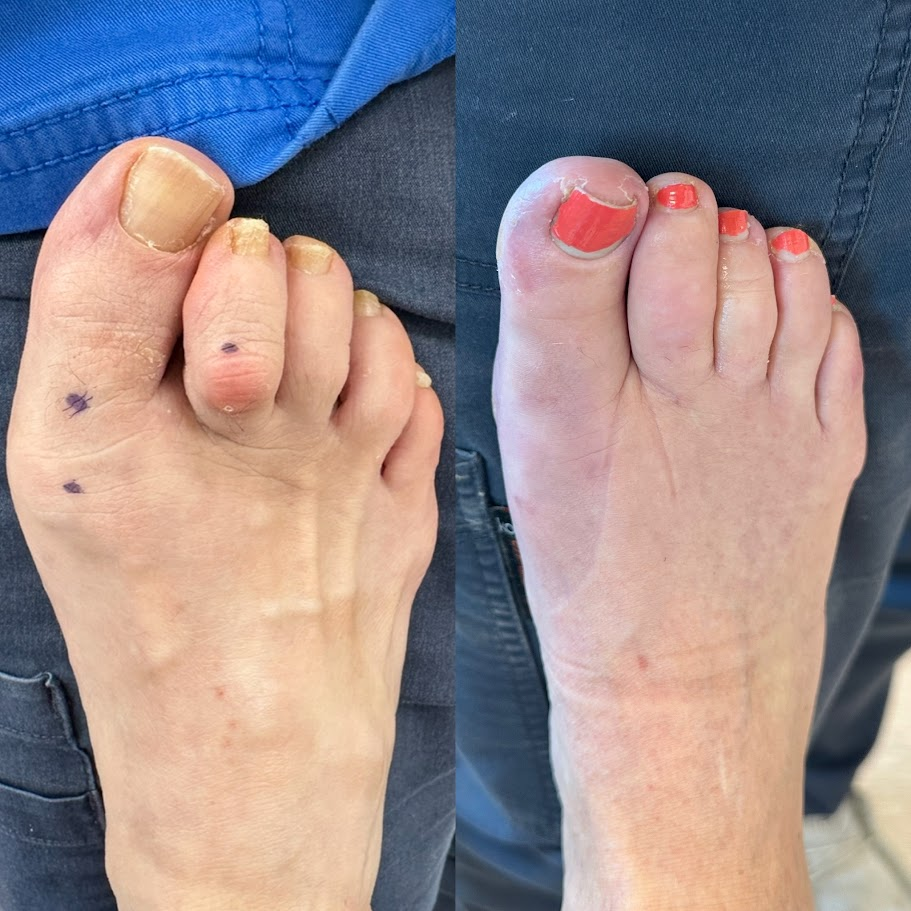
Example result shown for education. Individual results vary.
When Should Hammertoes Be Treated?
If hammertoes are painful, rubbing in shoes, causing corns or wounds, crowding other toes, or progressing over time, it is reasonable to schedule a consultation before the deformity becomes more rigid or complex.
Severe Does Not Always Mean Open Surgery
Many severe hammertoes can still be improved through a minimally invasive approach. The exact procedure depends on your exam, X-rays, flexibility, skin condition, and goals.
Protected Walking Is Built In
All procedures performed by Dr. Sullivan at The Bunion Cure are minimally invasive and designed around immediate protected weight-bearing in a post-op shoe.
What Is A Hammertoe?
A hammertoe is a toe deformity where one or more of the lesser toes bend or curl instead of sitting straight. Patients often notice rubbing on the top of the toe, pain at the tip of the toe, pressure between toes, painful calluses, or difficulty finding shoes that fit comfortably.
Hammertoes often happen alongside bunions because the big toe can crowd the lesser toes and push them out of alignment. That is why many patients benefit from evaluating the whole forefoot rather than treating one toe in isolation.
- Painful rubbing in shoes
- Corns or calluses on the top, tip, or side of the toe
- Toe crowding or crossing
- Progressive stiffness or contracture
- Second toe pain with a bunion
- Difficulty staying active because shoes hurt
Minimally Invasive Hammertoe Correction
Hammertoe correction is not one single operation. Depending on the toe and the severity, Dr. Sullivan may use soft-tissue releases, tendon balancing, small bone cuts, joint releases, or combined bunion and hammertoe correction. The goal is to improve alignment, reduce painful pressure points, and make shoes and walking more comfortable.
At The Bunion Cure, hammertoe procedures are performed without screws, plates, pins, or implants. Instead, the toes are stabilized with careful bandaging while they heal, similar to the way a fractured toe heals, but in a controlled and predictable position after the toe has been corrected under local anesthetic while you are numb.
1. Evaluate The Whole Foot
The team reviews your toe position, bunion position, X-rays, skin pressure points, circulation, sensation, and goals.
2. Match The Procedure
Flexible toes, rigid toes, severe deformities, and revision cases may need different minimally invasive techniques.
3. Bandage The Correction
No hardware is used. Careful bandaging holds the toes stable while the corrected toes heal.
4. Keep You Walking
Patients are walking very quickly after hammertoe procedures, using protected weight-bearing unless other mobility needs require extra support.
Severe Hammertoes And Combined Bunion Correction
Some patients are told elsewhere that a toe is too severe, too stiff, or may require a more aggressive procedure. At The Bunion Cure, even very severe hammertoes can often be improved without making amputation the plan. In Dr. Sullivan’s experience, if a patient has been told they may need amputation because of a hammertoe, he has been able to improve the toe position so that amputation is no longer necessary. A consultation can help determine what is realistic for your foot.
Hammertoe procedures are often performed in conjunction with bunion correction. When a bunion is pushing into the lesser toes, correcting the bunion and hammertoe together may create a better overall forefoot alignment than treating the hammertoe alone.
Because the procedures are performed through very small incisions, Dr. Sullivan can often correct toe deformities in multiple planes while minimizing scar tissue, stiffness, and soft-tissue disruption. In his experience, this makes recovery far easier for many patients than traditional open hammertoe surgery.
Conservative Care And When Surgery Makes Sense
Early or mild hammertoes may feel better with wider shoes, silicone sleeves, toe spacers, padding, callus care, or shoe changes. These options can reduce irritation, but they usually do not permanently straighten a structural hammertoe.
Surgery is usually considered when pain, shoe irritation, calluses, crowding, wounds, or progression are limiting activity or making shoes difficult. In our experience, correcting deformity before it becomes extremely rigid can make treatment more predictable.
Recovery Expectations
All patients are walking very quickly after hammertoe procedures, usually in a post-op shoe with protected weight-bearing. These procedures are typically very minimal, are done under local anesthetic while the toe is numb, and patients generally tolerate them very well.
One of the advantages of minimally invasive hammertoe correction is that recovery is usually very manageable, with minimal discomfort, minimal scar tissue, and less stiffness than many traditional open approaches in Dr. Sullivan’s experience. Swelling is still expected, and the timeline depends on how many toes are treated and whether bunion correction is done at the same time.
If a small corn, knuckle contracture, or minor recurrence needs attention later, the minimal nature of these procedures also makes touch-up correction relatively simple in many cases.
Frequently Asked Questions About Hammertoe Surgery
Can severe hammertoes be treated with minimally invasive surgery?
Many severe hammertoes can still be improved with a minimally invasive approach, but the exact recommendation depends on the exam, X-rays, toe flexibility, skin condition, circulation, and the patient’s goals.
Can hammertoe surgery be done at the same time as bunion surgery?
Yes. Hammertoe correction is often performed at the same time as bunion correction when both problems are contributing to pain, shoe irritation, toe crowding, or forefoot imbalance.
Will I be able to walk after minimally invasive hammertoe surgery?
The procedures Dr. Sullivan performs at The Bunion Cure are designed around immediate protected weight-bearing in a post-op shoe. Walking is protected and limited during early healing, not unrestricted normal activity.
Does minimally invasive hammertoe surgery use plates, screws, pins, or implants?
For the minimally invasive hammertoe procedures commonly performed at The Bunion Cure, correction is typically done without permanent plates, screws, pins, or implants. The exact technique depends on the toe deformity, X-rays, skin condition, and whether other forefoot procedures are being done.
Related Resources
Find Out What Is Realistic For Your Toes
Schedule a consultation so Dr. Sullivan and the medical team can evaluate your hammertoes, bunion position, X-rays, skin pressure points, and whether minimally invasive correction is appropriate.
Clinical content reviewed and approved by Dr. Jordan Sullivan on June 10, 2026. Individual results vary. The exact procedure and recovery plan depend on in-person evaluation, X-rays, health history, and patient goals.
Learn more about our focused minimally invasive forefoot model: What Makes The Bunion Cure Different?