
Minimally Invasive Foot Surgery In Littleton, Colorado
The Bunion Cure focuses on minimally invasive forefoot surgery for bunions, hammertoes, tailor’s bunions, selected heel and bone spurs, and complex forefoot problems when a smaller-incision approach is appropriate.
If you are new and trying to understand your options, Start Here gives you the broad overview. If you already know the condition you want to learn about, choose a procedure below.
The Bunion Cure helps patients understand bunions, hammertoes, bony prominences, painful shoe pressure, recovery planning, and whether a minimally invasive bunionectomy approach may fit their goals.
Local anesthesia
Protected walking
Forefoot focus
What Is This Page For?
This page is a procedure hub. Use it to find the right next page for bunions, hammertoes, tailor’s bunions, heel spurs, before-and-after examples, recovery planning, and consultation questions.
Focused Minimally Invasive Forefoot Care
Forefoot surgery, not general foot care
The Bunion Cure is designed around a focused set of forefoot problems rather than trying to be a general podiatry office for every condition.
Recovery that fits real life
Patients usually want to understand walking, shoes, work, family demands, and activity. We try to make the next step clear before surgery is ever scheduled.
Clear pathways through the site
Procedure pages, recovery pages, photos, FAQs, and consultation links are organized so you can move through the site without hunting for answers.
Common Foot Surgery Problems We Treat
Each foot is different, and the correct procedure depends on the exam, weight-bearing X-rays, medical history, deformity pattern, activity goals, and whether one or both feet are being treated.
Bunion Surgery
Learn how minimally invasive bunionectomy can improve painful big-toe alignment in appropriate candidates, often without retained plates or screws.
Hammertoe Surgery
Review minimally invasive hammertoe correction, pin timing, shoe irritation, toe position, and how hammertoes may be treated with or without bunion correction.
Tailor’s Bunion Surgery
Tailor’s bunions, also called bunionettes, create a painful bump on the outside of the foot near the fifth toe.
Heel Spurs & Bone Spurs
Selected heel spurs and bony prominences may be treated with smaller-incision procedures when the pain source and anatomy fit the approach.
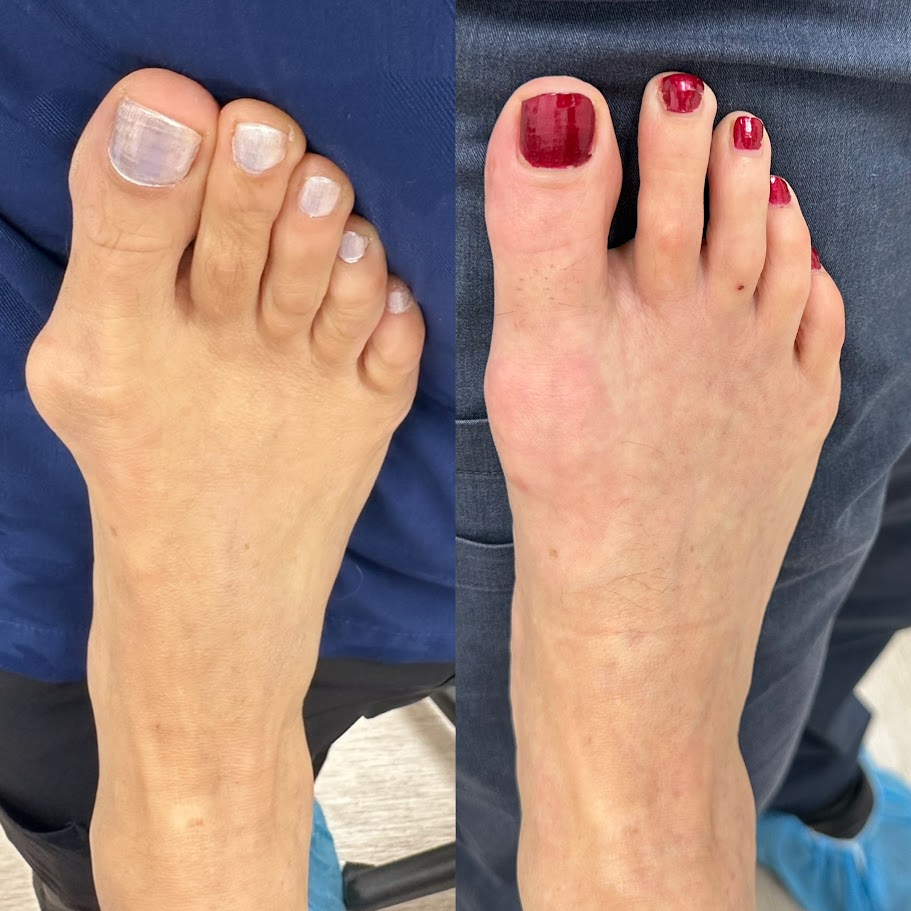
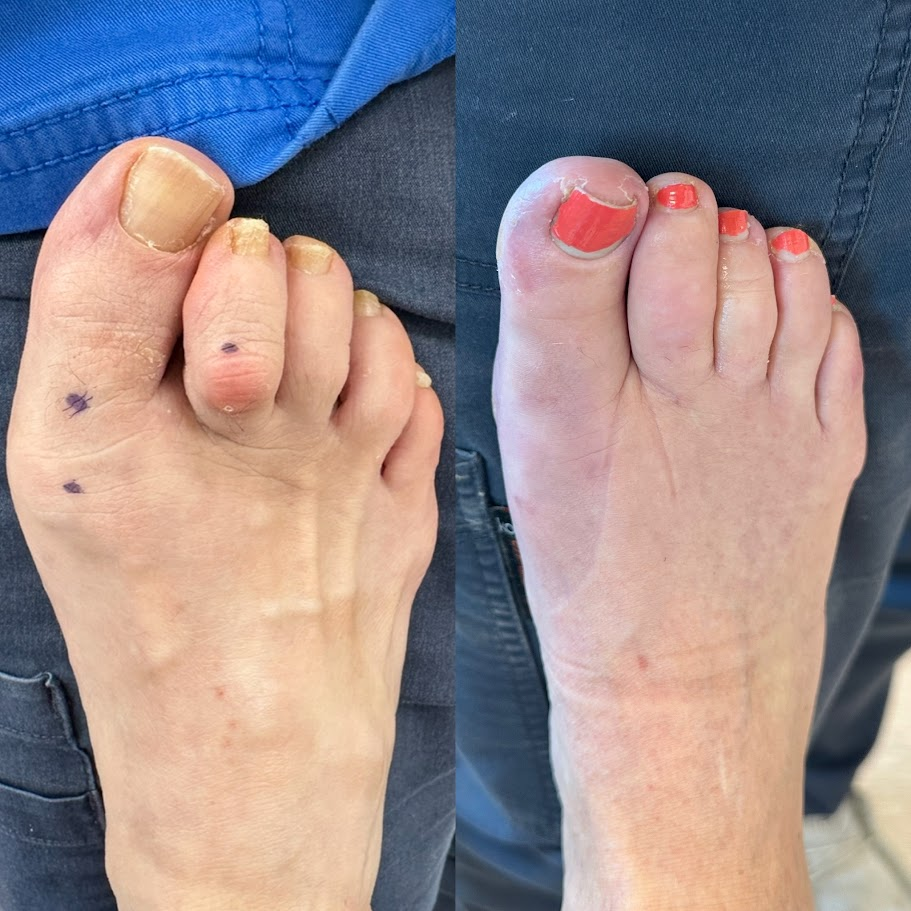
Before-And-After Examples
See real examples of bunion, hammertoe, tailor’s bunion, and complex forefoot corrections from the gallery.
Am I A Candidate?
Understand symptoms, X-rays, arthritis, medical factors, mobility, and safety considerations that affect candidacy.
See Real Patient Examples
Many patients want to know whether their foot looks similar to examples Dr. Sullivan’s team has treated. The gallery is the best place to review a broader set of labeled before-and-after photos.
These examples are individual results. Outcomes vary based on severity, healing, medical factors, procedure selection, and how closely recovery instructions are followed.

Meet Dr. Jordan Sullivan
Dr. Sullivan has focused heavily on minimally invasive forefoot surgery at The Bunion Cure since 2019. That repeated experience with bunions, hammertoes, bony prominences, calluses, revision-style problems, and combined deformities helps the team recognize patterns and explain realistic options.
The consultation is where the team connects your symptoms, X-rays, health factors, shoes, work demands, activity goals, and recovery needs to a specific plan.
Recovery Questions Patients Usually Ask Next
Getting around after surgery
Many procedures at The Bunion Cure are planned around protected walking right away, but the amount of time on your feet still needs to be limited early in recovery.
- Walking expectations vary by procedure and patient.
- Work timing depends heavily on job demands and accommodations.
- Activity and sports generally require a slower build back after bone healing.
Where to read more
The resource library has deeper patient-facing pages for walking, pain, risks, cost, work, travel, showering, sports, and frequently asked questions.
Helpful Next Pages
Recovery detailsShoes, swelling, pin timing, activity, and the staged recovery process.
When can I go back to work?Desk jobs, standing jobs, accommodations, and one-foot versus two-foot planning.
How painful is surgery?What patients usually feel and what affects discomfort.
Risks and complicationsRecurrence, stiffness, nerve symptoms, infection, healing, and revision risk.
Cost, insurance, and financingHow coverage and financing questions are usually handled.
Want To Know Which Page Applies To Your Foot?
Schedule a consultation so Dr. Sullivan and the team can review your symptoms, X-rays, goals, and whether a minimally invasive foot surgery option is appropriate.
This page was last reviewed by Dr. Jordan Sullivan on June 15, 2026.