
SERI bunionectomy procedure details
SERI Bunionectomy: The Specific Minimally Invasive Bunion Procedure We Use Most Often
SERI bunionectomy is a specific minimally invasive bunion correction technique. It is more precise than simply saying “minimally invasive bunion surgery,” but patients often use those terms interchangeably when searching for this kind of procedure.
At The Bunion Cure, SERI is used because it can correct the bunion in 3D, improve first metatarsal rotation, improve sesamoid alignment, and avoid the large incision and permanent plates or screws used in many traditional procedures.
SERI Snapshot
- Specific minimally invasive bunionectomy technique
- 3D correction including derotation goals
- Excellent sesamoid alignment is part of the goal
- Classic SERI uses temporary pin fixation
- Patients typically walk out with protected limited weight-bearing
What Is SERI Bunionectomy?
SERI bunionectomy is a specific minimally invasive bunion correction technique Dr. Sullivan commonly uses for appropriate patients. It is designed to improve bunion alignment in 3D, including metatarsal position, rotation, and sesamoid alignment, while using a small incision and temporary pin fixation instead of permanent plates or screws in the classic technique.
What SERI Actually Does
In the classic SERI technique, the first metatarsal is cut through a small incision, shifted into better alignment, derotated when needed, and temporarily stabilized while the bone heals. The temporary pin is commonly removed around 4 weeks after follow-up evaluation and X-rays.
This is an osteotomy, meaning a controlled bone cut that heals like a fracture. That is conceptually different from a Lapidus-style fusion, where a joint that normally wants to move is fused and held with larger hardware while the body stabilizes that fusion.
SERI is also a 3D correction. A well-executed SERI procedure can address more than the visible bump. The correction is designed to improve metatarsal alignment, derotation, and sesamoid position when the patient is an appropriate candidate.
Watch How Minimally Invasive Bunionectomy Works
This 40-second animation shows how the bone is repositioned, supported with a temporary pin, and allowed to heal. Your procedure is planned around your foot, X-rays, and goals.
The animation shows the bone cut, improved alignment, temporary pin, smoothing of the prominent bone edge, and new bone filling the gaps. Healing is shown in accelerated time; your recovery takes place over weeks and months.
Why The Details Matter
The goal is better alignment in multiple planes, not just shaving down the bump.
First metatarsal rotation matters because bunions are rotational deformities, not just side-to-side problems.
Sesamoid alignment is one of the key signs of correction quality and is tied to recurrence risk in the literature.
Less soft-tissue dissection may reduce scar tissue, stiffness, nerve irritation, and wound concerns.
Classic SERI uses a temporary pin rather than permanent plates or screws.
Patients keep loading the foot in a controlled way, which often makes recovery less disruptive.
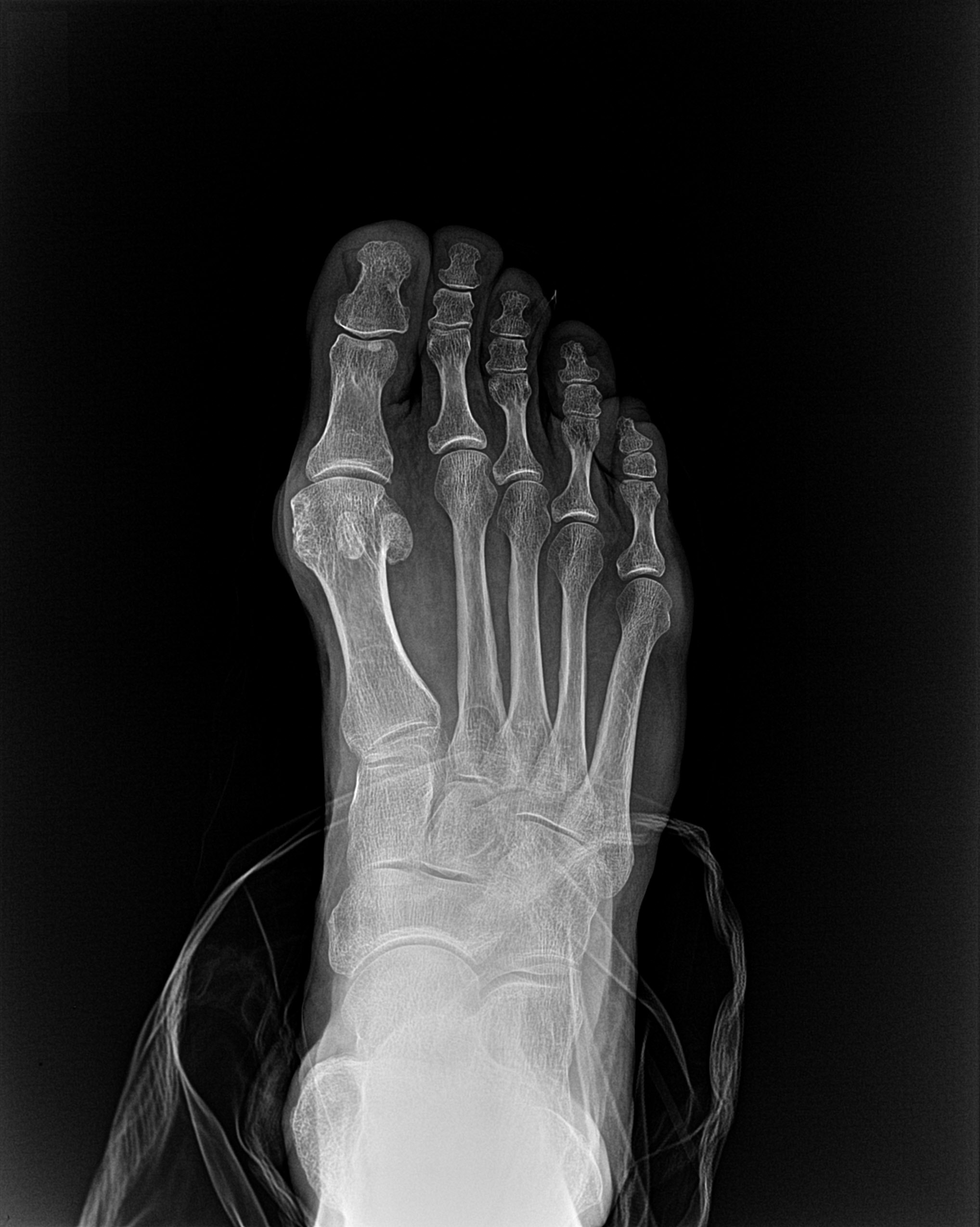 |
 |
Example fully healed minimally invasive bunion correction X-rays. Individual anatomy, healing, and results vary.
Why No Plates Or Screws?
Many bunion procedures rely on permanent plates, screws, staples, or other hardware. Hardware can be helpful in some procedures, but it can also cause irritation, increase cost, complicate revision surgery, and sometimes require removal later.
The classic SERI technique uses a temporary pin, commonly removed around 4 weeks. This allows immediate protected weight-bearing while keeping the incision small and avoiding large retained hardware in the foot.
How The SERI Care Cycle Usually Works
Consultation and X-rays
Dr. Sullivan and the medical team evaluate symptoms, shoe problems, progression, joint motion, deformity severity, medical history, and weight-bearing X-rays.
Procedure selection
SERI is the most common minimally invasive bunion procedure used here, but the final recommendation depends on your anatomy. Some patients need a simpler minimally invasive procedure.
Surgery day
Most patients are in the building for about two hours. The procedure itself often takes about 20 to 40 minutes depending on how many procedures are being performed.
Protected walking
Patients walk out in a post-op shoe with immediate but limited protected weight-bearing and specific instructions for swelling control and activity limits.
Pin removal and shoe transition
If a pin is used, it is commonly removed around week 4. Many patients begin transitioning toward a roomy normal shoe around this stage if swelling allows.
SERI Versus Lapidus Or Lapiplasty-Style Fusion
Lapidus and Lapiplasty-style procedures are fusion procedures. The main concept is that a midfoot joint is fused. That can be appropriate for selected patients, but it also creates stiffness where the joint is fused, may reduce adaptability to uneven surfaces, and generally requires a longer, more protected recovery because the body has to stabilize a joint fusion.
SERI is an osteotomy. A bone is cut, corrected, and allowed to heal like a fracture. For appropriate patients, that can mean smaller incisions, less soft-tissue disruption, no plates or screws in the classic technique, and a recovery built around protected walking.
What The Literature Supports
SERI is not a new or experimental idea. Published SERI literature includes large and long-term studies showing strong correction, functional improvement, osteotomy healing, and recurrence rates comparable to or better than many traditional bunionectomy or fusion-based procedures in selected patients.
We keep the literature discussion patient-friendly, but the key point is simple: this is a well-studied procedure, and The Bunion Cure has extensive experience performing minimally invasive forefoot correction.
Frequently Asked Questions About SERI Bunionectomy
What makes SERI bunionectomy different from traditional bunion surgery?
SERI is an osteotomy performed through a small incision. For appropriate patients, it is designed to correct alignment in 3D while avoiding the larger incision and permanent plates or screws used in many traditional or fusion-based procedures.
Does SERI bunionectomy use permanent plates or screws?
In the classic SERI technique used for appropriate patients, temporary pin fixation is commonly used instead of permanent plates or screws. The final fixation plan depends on the patient’s foot and procedure plan.
When is the temporary pin removed after SERI bunionectomy?
When a temporary pin is used, it is commonly removed around four weeks after follow-up evaluation and X-rays.
Is SERI bunionectomy right for every bunion?
No. SERI is commonly used at The Bunion Cure for appropriate candidates, but the final recommendation depends on symptoms, weight-bearing X-rays, joint motion, deformity pattern, medical history, and recovery goals.
Related SERI And Bunion Surgery Resources
Main bunion surgery page
A patient-friendly overview of minimally invasive bunion surgery and the experience at The Bunion Cure.
Walking after surgery
What protected walking means and how it differs from unrestricted activity.
Recovery timeline
What usually happens from surgery day through shoe transition and later activity.
Am I a candidate?
Review the symptoms, X-ray findings, and health factors that shape candidacy.
Before and after photos
Examples of bunion and hammertoe correction from a variety of feet.
Find Out Whether SERI Fits Your Foot
The right procedure depends on your X-rays, exam, symptoms, medical history, and goals. A consultation is the best next step.
Clinical review status: reviewed and approved by Dr. Jordan Sullivan on June 10, 2026.
Learn why our practice is built around focused minimally invasive forefoot correction on the page What Makes The Bunion Cure Different?