
Am I A Candidate For Minimally Invasive Bunionectomy?
The main reasons to consider bunion surgery are pain, activity limitation, shoe irritation, and progression. If a bunion limits your walking, activity, shoes, or continues to worsen over time, you may be a candidate for correction at The Bunion Cure.
Progression over time
Toe crowding
Protected walking recovery
Symptoms matter most
Pain, activity limitation, shoe irritation, and progression are the strongest reasons to consider surgery.
Function matters
The goal is to improve comfort, shoe fit, activity, and structure before the deformity becomes harder to correct.
Exam and X-rays decide
Dr. Sullivan and the medical team evaluate the foot, joint motion, severity, and risk factors before recommending a plan.
The Best Reason To Have Bunion Surgery
The best reason to have bunion surgery is not simply that the foot looks different. Appearance can matter to patients, but surgery is usually most appropriate when the bunion is causing real symptoms, functional problems, or worsening deformity.
The strongest reasons: pain, activity limitation, shoe irritation, trouble finding comfortable shoes, progression over time, toe crowding, related forefoot problems, or difficulty walking, exercising, or staying active because of the bunion.
Who Is Often A Good Candidate?
You may be a good candidate for minimally invasive bunionectomy if you have:
- A painful bunion or shoe irritation
- A bunion that limits activity or continues to progress
- Toe crowding or related forefoot problems
- Mild, moderate, or severe bunion deformity
- Interest in avoiding midfoot fusion when safely possible
- Interest in avoiding permanent plates or screws when safely possible
- A goal of correcting the bunion with a practical recovery plan
How Minimally Invasive Bunionectomy Fits
minimally invasive bunionectomy is the specific minimally invasive bunionectomy procedure Dr. Jordan Sullivan commonly uses for appropriate candidates.
It is a 3D bunion correction designed around first metatarsal derotation, sesamoid alignment, smaller incision, temporary pin fixation, local anesthesia in the typical procedure, and immediate but limited protected walking.
The final decision depends on your exam, weight-bearing X-rays, joint motion, deformity pattern, medical history, and recovery goals.
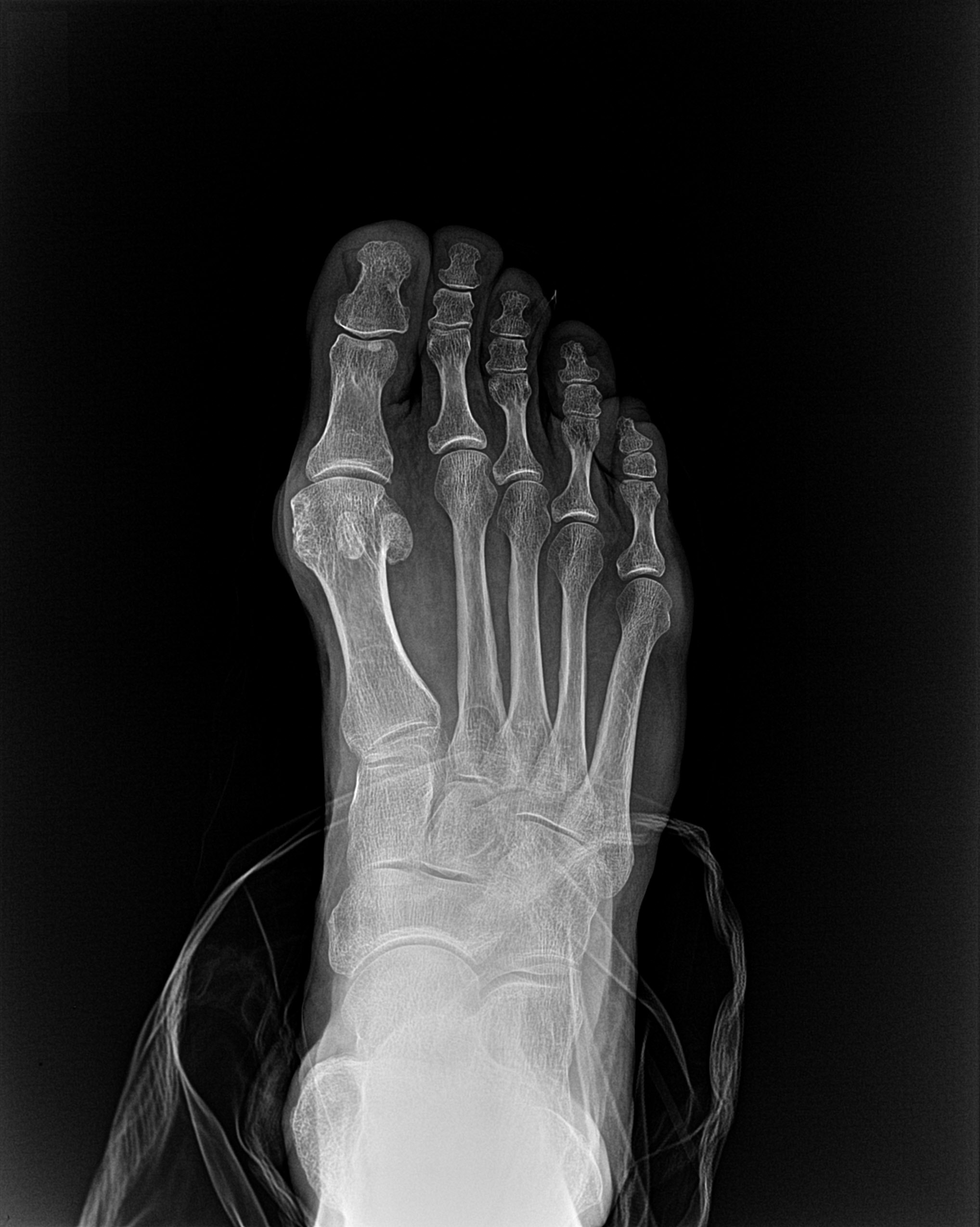
Fully Healed X-Ray Example
These X-rays show a clean before-and-after example of minimally invasive bunion correction without retained plates or screws. Individual results vary, and the right procedure depends on each patient’s foot and X-rays.

Severe Bunions And Special Situations
Severe bunions
Dr. Sullivan commonly treats severe bunions with minimally invasive correction when the joint and overall foot structure are appropriate. Severe bunions can be less predictable, but large improvement is often realistic.
Arthritis
Arthritis does not automatically rule out minimally invasive bunionectomy. The amount of arthritis, joint motion, pain location, X-rays, and goals all matter.
Poor circulation
Poor circulation does not automatically rule out surgery. A smaller incision and less soft-tissue disruption may be helpful for some patients, but healing risk still needs evaluation.
Revision surgery
Revision bunions are often candidates for minimally invasive correction. Some hardware can be worked around, but extensive retained hardware may require another strategy.
Medical Factors That Need Careful Review
Nicotine
Nicotine increases healing risk. The Bunion Cure generally wants patients to minimize or stop nicotine use before surgery whenever possible.
Diabetes
Diabetes does not automatically rule out minimally invasive bunionectomy. If your A1c is out of control, you may need better control before surgery.
Neuropathy
Neuropathy requires careful evaluation. Severe neuropathy may make certain correction procedures unsafe because it can be harder to protect the foot during recovery.
Home support
Safety, support at home, balance, work needs, and procedure complexity all matter, especially if both feet or multiple procedures are being considered.
When Might Minimally Invasive Bunionectomy Not Be The Right Choice?
Minimally invasive bunionectomy is not the right procedure for every patient. Dr. Sullivan may recommend a different plan or refer a patient out if the exam suggests severe instability in a young patient where a Lapidus-style fusion may be more appropriate, severe neuropathy with inability to protect the foot, uncontrolled diabetes, nicotine risk that should be improved, unsafe home support, revision hardware that blocks correction, or a deformity pattern better treated with another procedure.
The goal is not to force every patient into one procedure. The goal is to choose the procedure plan that best fits the foot, X-rays, medical risk, and recovery needs.
Can Both Feet Be Treated In One Recovery Plan?
Often, yes. The Bunion Cure can often coordinate bilateral bunion correction into one overall recovery plan when appropriate. This can help patients avoid two separate recovery periods.
Some patients may still be better served by staging procedures, depending on medical risk, support at home, work demands, balance, safety, and procedure complexity.
What Happens At The Consultation?
During a consultation, Dr. Sullivan evaluates symptoms, activity limitations, shoe irritation, daily function, weight-bearing X-rays, bunion severity, first metatarsal position and rotation, sesamoid alignment, joint motion, arthritis, circulation, diabetes control, nicotine use, neuropathy, prior surgery or retained hardware, and home support.
The consultation is where the procedure plan becomes specific.
Helpful Next Reads
If you are deciding whether minimally invasive bunionectomy fits your foot, these pages answer the next practical questions patients usually ask.
Am I A Candidate?Start with symptoms, X-rays, health factors, and whether minimally invasive bunionectomy may fit your foot.Check candidacy
Minimally Invasive Bunionectomy vs Traditional Bunion SurgeryCompare smaller-incision minimally invasive correction with traditional open bunion surgery.Compare
Minimally Invasive Bunionectomy vs LapiplastyUnderstand osteotomy healing, fusion, hardware, stiffness, and recovery differences.Compare
Risks And ComplicationsReview recurrence, swelling, nerve symptoms, healing concerns, and how risk is reduced.Review risks
Return To WorkDesk jobs, standing jobs, work accommodations, and return-to-work timing after bunion surgery.Plan work
Traveling For SurgeryPlan out-of-town visits, flying home, post-op checks, and week-four pin removal.Plan travel
Walking After SurgeryLearn what immediate but limited protected walking really means after surgery.Read more
Want to know whether this fits your foot?
The best next step is a consultation so Dr. Sullivan and the medical team can review your X-rays, symptoms, goals, and risk factors.
Medical note: This page is general education and does not replace medical advice. Bunion surgery decisions should be made after an exam, weight-bearing X-rays, medical history review, and discussion with a qualified surgeon. Reviewed by Dr. Jordan Sullivan. Last reviewed: June 8, 2026.
Compare Your Foot To Real Examples
Candidacy depends on your exam, X-rays, medical history, and goals. The before-and-after gallery can help you see the range of bunion, hammertoe, and complex forefoot problems evaluated at The Bunion Cure.