Short answer: Many people with heel pain improve with daily conservative care: calf and plantar-fascia stretching, supportive shoes or inserts, activity changes, and ice. A spur on imaging often stays put even when the pain settles, because the pain frequently comes from soft tissue, especially the plantar fascia, not from the spur itself. Surgery is not the first step for new heel pain.
If you are searching for heel spur relief, you probably want that first-step morning stab to stop, or the ache after standing and walking to settle down. A heel spur on an X-ray is a common finding. It is not always what hurts.
This page covers what a heel spur is, what usually drives plantar heel pain, what often helps at home, and when an exam makes sense. It is educational. Individual results vary.
Heel spur vs what usually hurts
A heel spur is a bony prominence on the heel bone (calcaneus). On the bottom of the heel it often forms near where the plantar fascia attaches. On the back of the heel it can form near the Achilles tendon, or show up as a pump bump that rubs in shoes.
Radiographic finding: a spur visible on X-ray.
Pain source: often irritated or overloaded plantar fascia, Achilles-related irritation, or a bony prominence that rubs.
Major orthopedic patient guidance notes that most people with heel bone spurs do not have heel pain, and that plantar fasciitis pain can be treated without removing the spur. Chasing the spur alone is the wrong first move for many patients.
Plantar (bottom-of-heel) pain is often worse with the first steps after rest, eases somewhat with walking, then may return after longer standing or activity. That pattern is classic for plantar fascia problems.
Posterior (back-of-heel) pain or rubbing in closed shoes points more toward a posterior prominence or Achilles-related irritation. That is a different problem from bottom-of-heel fasciitis and is evaluated differently.
What often helps at home
These steps are the usual starting point for plantar heel pain. They calm overload on the plantar fascia and calf. They do not dissolve a spur.
- Ease activities that flare it. Cut back on pounding while symptoms are hot. Cycling or swimming is often easier on the heel.
- Stretch calves and the plantar fascia every day. Morning stretches before full weight-bearing help many people.
- Supportive shoes and inserts. Cushioned soles and decent arch support usually beat flat footwear. See shoe inserts for heel spurs.
- Ice. About 15 to 20 minutes after activity.
- Short-term over-the-counter anti-inflammatories such as ibuprofen or naproxen, if your own doctor says they are safe. Do not use them long-term without medical advice.
- Night splint when tolerated. Keeps a gentle stretch overnight for selected patients.
Most people with plantar fasciitis improve over months with consistent nonsurgical care. Still working the basics at week four is normal, not a failure.
Cortisone injections when warranted
For plantar fasciitis, cortisone or steroid injections can help selected patients. At The Bunion Cure we will do those when they are warranted after exam. An injection is aimed at soft-tissue inflammation in the plantar fascia. It does not remove a bone spur, and it is not routine for every kind of heel pain. Like any steroid injection around the plantar fascia, it carries risks your clinician should discuss with you, including possible weakening of the tissue.
We do not claim every marketed heel device or injection (for example shockwave or platelet-rich plasma) as something we offer here. Those options appear in broader medical discussions; whether any fit you is decided after exam.
When to get an exam
- Heel pain lasting more than a few weeks despite rest, better shoes, and stretching
- Pain limiting work, walking, or sleep
- Numbness, concerning swelling, fever, or inability to bear weight
- Diabetes, poor circulation, or healing problems
- Pain mainly at the back of the heel or a bony bump rubbing in shoes
- Months of good conservative care already tried and you want a clear next plan
An exam and, when needed, imaging help sort plantar fasciitis from a painful spur, posterior prominence, Achilles-related disease, stress injury, or other causes. A spur on an old X-ray does not automatically set the treatment.
If conservative care is not enough
Surgery is reserved for selected chronic cases, not for a brand-new heel ache. At The Bunion Cure, heel procedures are matched to the pain source after exam and imaging. Examples on our heel spur surgery page include plantar fascia release for chronic plantar fasciitis after a prolonged failed conservative course; shaving a truly painful plantar spur in selected cases; and small-incision resection of a posterior bony prominence or pump bump when the problem is mainly bone rubbing in shoes. Severe long-standing Achilles tendon disease may need a more traditional open approach.
Recovery rules depend on the procedure. Details live on the surgery and recovery time pages. This page stays on relief and timing.
Frequently asked questions
Often no. Many spurs are asymptomatic. Treating the soft-tissue overload, usually the plantar fascia, is the usual first path.
There is no honest overnight cure. The most reliable gains usually come from stretch, support, activity change, and ice done every day.
Home care can make pain much more livable. It does not reliably erase the bone spur on X-ray, and it does not need to if the spur was not the pain generator.
When symptoms are chronic, function is limited, and appropriate nonsurgical care has been tried. The operation, if any, depends on the actual pain source.
For plantar fasciitis, yes when warranted after exam. Injections target soft-tissue inflammation. They do not remove a bone spur and are not used for every type of heel pain.
Related pages
- Heel spur surgery
- Heel spur surgery recovery time
- Shoe inserts for heel spurs
- Heel spur support options
- When to see a foot pain specialist
- Free consultation
Talk with us about your heel pain
Bring a clear story: where the heel hurts, how long it has lasted, which shoes or activities flare it, and what you have already tried. We will match next steps to the actual pain source, not just the X-ray label. Free consultation · Call 720-758-6760.
Medically reviewed by Jordan Sullivan, DPM · Updated November 9, 2026
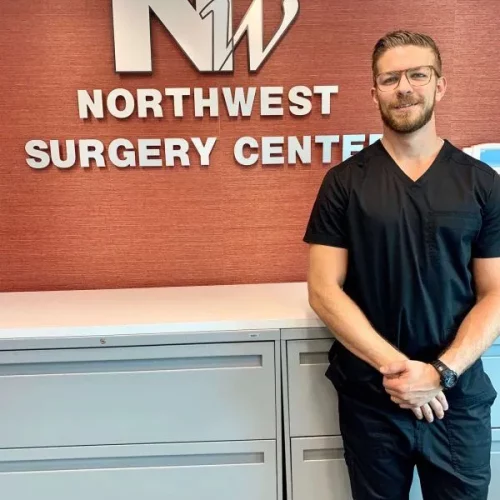
Reviewed By Dr. Sullivan
Dr. Jordan Sullivan, DPM, is a podiatrist board certified by the American Board of Podiatric Medicine (ABPM) at Northwest Surgery Center specializing in minimally invasive foot and ankle procedures. He’s passionate about helping patients get back on their feet faster with less downtime.
Learn more about Dr. Sullivan here.